Secret message found with carrier pigeon may never be deciphered


 Secret message found with carrier pigeon may never be decipheredBritish man finds carrier pigeon skeleton in his fireplace with unbreakable secret code (Reuters)


Before military forces had secure cell phones and satellite communications, they used carrier pigeons. The highly trained birds delivered sensitive information from one location to another during  World War II. Often, the birds found the intended recipient. But not always.


A dead pigeon was recently discovered inside a chimney in Surrey, England. There for roughly 70 years, the bird had a curious canister attached to its leg. Inside was a coded message that has stumped the experts.


The code features a series of 27 groups of five letters. According to Reuters, nobody from Britain’s Government Communications Headquarters has been able to decipher it. The message was sent by a Sgt. W. Scott to someone or something identified as “Xo2.”


A spokesperson remarked, “Although it is disappointing that we cannot yet read the message brought back by a brave carrier pigeon, it is a tribute to the skills of the wartime code-makers that, despite working under severe pressure, they devised a code that was indecipherable both then and now.”


The bird was discovered by a homeowner doing renovations earlier this month. In an interview with Reuters, David Martin remarked that bits of birds kept falling from the chimney. Eventually, Margin saw the red canister and speculated that it might contain a secret message. And it seems as if the message will always be secret.


Carrier pigeons played a vital role in wars due to their incredible homing skills. All told, U.K. forces used about 250,000 of the birds during World War II.


Wireless News Headlines – Yahoo! News


Read More..

Larry Hagman Dies


TV News


11/24/2012 at 12:00 AM EST


Larry Hagman has died.

The actor, who famously played J.R. Ewing on the hit primetime soap Dallas, was 81.

"When he passed, he was surrounded by loved ones," his family said in a statement released to the Dallas Morning News on Friday. "It was a peaceful passing, just as he had wished for. The family requests privacy at this time."

"This is so sad. Larry was really someone who was loved by everyone," his agent Joel Dean tells PEOPLE. "Me especially. He was the most loving, wonderful, generous man. And he was a true trouper."

In late 2011, Hagman announced that he was battling cancer but he had also signed on to star in the TNT reboot of Dallas, which recently started filming its second season.

"Larry was back in his beloved Dallas, re-enacting the iconic role he loved most," his family said in the statement.

In addition to portraying J.R. – a lovable, scheming, villainous oilman, whose shooting death was a topic of international water-cooler discussion – Hagman starred alongside Barbara Eden as Major Anthony Nelson in the iconic '60s hit sitcom I Dream of Jeannie.

According to the Morning News report, Hagman's Dallas costars Linda Gray and Patrick Duffy were by his side on Friday at Medical City Dallas Hospital when he died.

Read More..

Researcher zeros in on historic wreck


In its day, the five-masted George E. Billings was a graceful schooner that crossed the Pacific with enough lumber to build 100 homes. In the end, it was a barge for weekend anglers, a white elephant so costly that its owner towed it to sea, torched it and let it sink.

A four-paragraph story in the Feb. 12, 1941, Los Angeles Times made a vague reference to its resting place: "a lonely island reef north of here." A photo showed a flaming hulk with smoke billowing over rugged hills.

Just where the Billings lay was anyone's guess. Shipwreck buffs knew, though, that whoever found it would peel back the layers on more than a century of rough-and-tumble Western maritime history.


Robert Schwemmer, an archaeologist for the National Oceanic and Atmospheric Administration who presented a paper on the Billings at a scientific meeting last month, had been seeking the ship for the better part of two decades. A diver, Schwemmer has explored dozens of wrecks off the Channel Islands, including the Gold Rush steamer Winfield Scott, which for eight days in 1853 stranded about 400 passengers on Anacapa Island.

The Billings, though, held a special allure. It was a remnant from the dying days of the age of sail. And it was probably hidden in plain sight off the jagged shores Schwemmer had gotten to know so well.

"We always thought it was just over the next reef, just around the next rock," he said.

On his periodic research expeditions through the 1,470-square-mile Channel Islands National Marine Sanctuary, Schwemmer kept a copy of the 1941 Times photo, comparing the smoke-obscured hills behind the burning ship with the hills before him. Later, he would also use a second photo with a more detailed view of the terrain.

For many years, the Billings was hard to miss. The last and largest of 108 wooden ships produced by the Hall Bros. shipyard of Port Blakely, Wash., the Billings was 224 feet long, roughly the distance between the wingtips of a Boeing 747. Named for a company executive, it delivered Pacific Northwest lumber to Australia and sometimes hauled back a mountain of Hawaiian sugar.

As many as 13 crew members shipped aboard the Billings, sailing it the same way tough crews had sailed similar craft for centuries.

In Solvang, a 73-year-old podiatrist named Jens Birkholm treasures stories of the Billings that he heard as a boy in Denmark. His paternal grandfather, Fredrik Birkholm, was an early captain and his maternal grandfather, Wilhelm Jarlshöi was first mate.

Fredrik's wife, in the custom of the day, accompanied her husband and raised their children amid the towering waves, they told Jens. The Billings' Japanese cook had been a schoolteacher before he was kidnapped and forced to work on ships. The cook was so grateful to serve on the Billings, Birkholm said, that he sent the captain a set of porcelain teacups still cherished by the family.

Before long, the Billings was edged out of business by ships with mighty engines. In 1926, its masts were removed and new owners towed it to Southern California. It became a fishing barge off Del Mar and Santa Monica, hosting day trippers and overnight guests who hopped ferries from the mainland for a two-mile jaunt offshore.

In 1929, Bob Oefinger, the Billings' chief steward and owner, raved about the accommodations.

"Whole families have been coming aboard and making overnight stays, the ship having roomy cabins available," he told The Times. "There are sun decks with reclining chairs, rest salons, a big dining salon and plenty of space for fishing."

To the dismay of local authorities, some barges like the Billings became gambling ships. Tony "Tony the Hat" Cornero, a former bootlegger, ran the S.S. Rex, a luxurious casino off Santa Monica whose slot machines and card tables were thrown overboard by police after a nine-day standoff in 1939. The dapper Cornero said he finally left the old schooner because he needed a haircut and "the only thing I haven't got aboard ship is a barber."

Barge owners had it worse the next year.

In a thick fog outside Los Angeles Harbor, eight people died when a Japanese freighter sliced into the fishing barge Olympic II. Lacking bulkheads that would help keep it afloat, the Olympic II sank within minutes.

Whether the barges were used for blackjack or barracuda, that brought an end to them. Regulators were cracking down and owners could not afford to comply. On Feb. 11, 1941, Oefinger, the owner of the Billings, told The Times that he had destroyed his aging vessel the previous night rather than face fines of $500 a day for not making repairs.

Just why he publicized the scuttling — even as he hid its location — is a question that has vexed many an old salt.

"Maybe he wanted to send a message," Schwemmer said.


Read More..

Military Analysis: For Israel, Gaza Conflict Is Test for an Iran Confrontation


Menahem Kahana/Agence France-Presse — Getty Images


An Israeli missile is launched from a battery. Officials said their antimissile system shot down 88 percent of all assigned targets.


WASHINGTON — The conflict that ended, for now, in a cease-fire between Hamas and Israel seemed like the latest episode in a periodic showdown. But there was a second, strategic agenda unfolding, according to American and Israeli officials: The exchange was something of a practice run for any future armed confrontation with Iran, featuring improved rockets that can reach Jerusalem and new antimissile systems to counter them.


It is Iran, of course, that most preoccupies Prime Minister Benjamin Netanyahu and President Obama. While disagreeing on tactics, both have made it clear that time is short, probably measured in months, to resolve the standoff over Iran’s nuclear program.


And one key to their war-gaming has been cutting off Iran’s ability to slip next-generation missiles into the Gaza Strip or Lebanon, where they could be launched by Iran’s surrogates, Hamas, Hezbollah and Islamic Jihad, during any crisis over sanctions or an Israeli strike on Iran’s nuclear facilities.


Michael B. Oren, the Israeli ambassador to the United States and a military historian, likened the insertion of Iranian missiles into Gaza to the Cuban missile crisis.


“In the Cuban missile crisis, the U.S. was not confronting Cuba, but rather the Soviet Union,” Mr. Oren said Wednesday, as the cease-fire was declared. “In Operation Pillar of Defense,” the name the Israel Defense Force gave the Gaza operation, “Israel was not confronting Gaza, but Iran.”


It is an imprecise analogy. What the Soviet Union was slipping into Cuba 50 years ago was a nuclear arsenal. In Gaza, the rockets and parts that came from Iran were conventional, and, as the Israelis learned, still have significant accuracy problems. But from one point of view, Israel was using the Gaza battle to learn the capabilities of Hamas and Islamic Jihad — the group that has the closest ties to Iran — as well as to disrupt those links.


Indeed, the first strike in the eight-day conflict between Hamas and Israel arguably took place nearly a month before the fighting began — in Khartoum, the capital of Sudan, as another mysterious explosion in the shadow war with Iran.


A factory said to be producing light arms blew up in spectacular fashion on Oct. 22, and within two days the Sudanese charged that it had been hit by four Israeli warplanes that easily penetrated the country’s airspace. Israelis will not talk about it. But Israeli and American officials maintain that Sudan has long been a prime transit point for smuggling Iranian Fajr rockets, the kind that Hamas launched against Tel Aviv and Jerusalem over recent days.


The missile defense campaign that ensued over Israeli territory is being described as the most intense yet in real combat anywhere — and as having the potential to change warfare in the same way that novel applications of air power in the Spanish Civil War shaped combat in the skies ever since.


Of course, a conflict with Iran, if a last-ditch effort to restart negotiations fails, would look different than what has just occurred. Just weeks before the outbreak in Gaza, the United States and European and Persian Gulf Arab allies were practicing at sea, working on clearing mines that might be dropped in shipping lanes in the Strait of Hormuz.


But in the Israeli and American contingency planning, Israel would face three tiers of threat in a conflict with Iran: the short-range missiles that have been lobbed in this campaign, medium-range rockets fielded by Hezbollah in Lebanon and long-range missiles from Iran.


The last of those three could include the Shahab-3, the missile Israeli and American intelligence believe could someday be fitted with a nuclear weapon if Iran ever succeeded in developing one and — the harder task — shrinking it to fit a warhead.


A United States Army air defense officer said that the American and Israeli militaries were “absolutely learning a lot” from this campaign that may contribute to a more effective “integration of all those tiered systems into a layered approach.”


The goal, and the challenge, is to link short-, medium- and long-range missile defense radar systems and interceptors against the different types of threats that may emerge in the next conflict.


Even so, a historic battle of missile versus missile defense has played out in the skies over Israel, with Israeli officials saying their Iron Dome system shot down 350 incoming rockets — 88 percent of all targets assigned to the missile defense interceptors. Israeli officials declined to specify the number of interceptors on hand to reload their missile-defense batteries.


Before the conflict began, Hamas was estimated to have amassed an arsenal of 10,000 to 12,000 rockets. Israeli officials say their pre-emptive strikes on Hamas rocket depots severely reduced the arsenal of missiles, both those provided by Iran and some built in Gaza on a Syrian design.


Read More..

Amazon Kindle Fire HD 8.9 is Good, But No iPad Killer [REVIEW]


Unboxing the Kindle Fire HD 8.9


Click here to view this gallery.


[More from Mashable: Apple Now Owns the iMessage Name]


Amazon expands its tablet sights with the bigger, more powerful Kindle Fire HD 8.9. Can it compete against Apple‘s iPad?


If there’s one company that deserves credit for reigniting the iPad competitor market, it’s Amazon. Despite some bugs and an overall blah design, its 7-inch Kindle Fire was the first Android tablet that made sense to consumers who gobbled it up to help the Fire grab 50% of the Android tablet market in just 6 months.


[More from Mashable: 9 Black Friday Deals For iPhone Owners]


That tablet essentially opened the flood gates for a new set of ever-more-powerful 7-inchers from, notably, Barnes & Noble and Google. All three companies have already updated their 7-inch offerings to more powerful components and higher-resolutions screens. They’re all still running Android, though Amazon and Barnes & Noble choose to hide the Google OS behind smarter and much more consumer-friendly interfaces.


All this led Apple to finally enter the mid-sized tablet space with the iPad Mini. It’s easily the best-looking tablet of the bunch, but also $ 120 more expensive than its nearest competitor.


The more interesting development, though, is Amazon‘s (and Barnes & Noble‘s) decision to go toe-to-toe with Apple’s full-size iPad and launch the Amazon Kindle Fire HD 8.9 (in 4G LTE and WiFi-only). The move is akin to a middle weight boxer putting on the pounds to take on the Heavyweight world champion. Amazon’s Kindle Fire HD is slightly smaller (the iPad is 9.7-inches), lighter (567g vs. 625g), cheaper ($ 369 for 32 GB model vs. $ 599 for the iPad 4th Gen — Amazon subsidizes with sleep-state ads, that I do not mind) and overall somewhat less powerful. In order to win the battle, the 8.9-inch Kindle Fire HD better be pretty nimble on its feet, while able to throw that all important knockout punch.


Short version of this story: the Kindle Fire HD 8.9 does some serious damage, but the iPad 4th Gen gets the decision and retains the tablet leader title.


The Kindle Fire HD 8.9 is by no means a failure. In many ways, it’s as good as the smaller Kindle Fire HD, but throughout my tests I noticed odd bugs and glitches (which should all be fixable by software) and a somewhat disturbing lack of power that’s especially obvious when you put the Fire HD 8.9 next to the iPad 4th Gen


What It Is


If you’ve never seen an iPad and someone handed you the Kindle Fire HD .9, you’d likely say its jet-black, soft-to-the-touch plastic body felt good in your hands and was more than effective at all the core tasks (reading, game playing, e-mail, web browsing).


Design-wise, the 8.9 device looks exactly like the 7-inch model, complete with the too-hard to find volume and power buttons. There are no other physical buttons on this device, but Amazon chooses to hide the few it has by making them the exact same color as the chassis and flush with the body. Every time I use the tablet I do the “where’s the damn button” dance, rotating the Kindle Fire HD round and round until I feel the buttons (since I can barely see them).


I have applauded Barnes & Noble for putting the physical “N” home button right on the face of their Nook HD. Bravo for having the guts to do this. Amazon apparently looks at Apple’s iPad home button and thinks to have anything similar would be seen as “copying” the Cupertino hardware giant, when instead they should realize that it works, consumers like it and tablets without it are at a distinct disadvantage.


Amazon’s interface has you make do with a virtual, slide-out home button that is always available. Problem is, I found times when it wasn’t available. When I played Spider-Man and Asphalt 7, the tiny little left-had bar would disappear and I couldn’t exit the game unless I hit the sleep/power button.


The rest of the Kindle Fire HD 8.9′s body is solid and unremarkable (if you read my Kindle fire HD 7 review, then you know exactly what to expect.). Like the iPad 4th Gen, the Kindle Fire HD 8.9 has a front-facing 720p-capable camera. It’s useful for capturing video, snapping 1 Megapixel images and, probably most important, Skype video chats. Skype has built a fairly sharp-looing Kindle Fire app, though the design doesn’t fully fit the larger 8.9-inch screen. Skype just updated its Android app for better tablet viewing and hopefully, we’ll see this update hit the Kindle Fire HD 8.9 as well.


The iPad also has an HD rear-facing camera. The Kindle fire HD 8.9 does not (Barnes & Noble leave out cameras altogether)


Not Packing a Punch


As a large-screen high-resolution tablet (though iPad’s 2048×1536 retina display beats it), the Kindle Fire HD 8.9 offers plenty of attractive screen real estate for web browsing, book and magazine reading and games. But the results can be mixed. Silk, Amazon‘s custom web browser, was occasionally less than responsive and games, though, they ran well, never looked half as good as they do on the considerably more expensive iPad 4.


Granted, you can’t always find the same high-quality immersive action games on both Android and iOS, but Asphalt 7 Heat is a notable exception and it throws the performance differences between the two tablets into stark contrast. Game play is equally responsive on both platforms: the Kindle Fire HD 8.9’s accelerometer reads my moves just as well as the iPad.


The graphics on the Kindle Fire HD, however, are reduced to blobs and blocks (palm trees without distinct leaves, buildings without discernible windows) . The iPad’s quad-core graphics simply overmatch the Kindle Fire. I have never, for example, seen an iPad draw the game as I was playing, as I did when I tried out The Amazing Spider-Man.


Additionally, I experienced more than my share of crashes with games and even magazine apps like Vanity Fair.


The Good


Not everyone, however, will compare the Kindle Fire HD 8.9 to the iPad. Some will see the $ 299 entry-level price point (for the 16 GB model) and appreciate the power, flexibility and utility of this device. Like all Fire’s before it, the Kindle Fire HD 8.9 makes it easy to consume mass quantities of content. Nearly every menu option: Games, Apps, Books, Music, Videos, Newsstand, puts you just one click away from shopping for fresh content. If you have an Amazon account (and who doesn’t) your desired book, music or movie is just a click away. Plus, you can still easily store any of it locally, and worry about running out of storage space, or in the cloud, and never worry about space or accessibility—you can get to that purchased Kindle content from any Kindle app or registered Amazon device.


Watching movies on the tablet is a pleasure. I streamed a couple through Amazon Prime; they looked good on the 1920 x 1200 screen and the Dolby Stereo speakers produced sharp, loud, almost room-filling sound—an impressive feat not even the iPad can match.


The Kindle Fire HD 8.9 also includes a mini-HDMI-out port, which prompted me to connect the tablet to my 47-inch LED HDTV so we could watch Disney’s Brave. Yes, I had to get up and tap on the Kindle screen each time I wanted to pause and restart the move, but otherwise, I was pretty impressed with how the Kindle handled the task.


Obviously I yearn for an Apple Airplay-like feature on Android tablets (rumor has it one is coming), but this is the next, best thing.


There isn’t a lot to say about the Kindle Fire HD 8.9-inch interface that I did not say in the Kindle Fire HD 7 review. I will note, however, that the increased real estate makes the trademark task carousel seem almost too big. Icons for everything from your recently played Spider-Man game to magazine apps, books and Web sites all sit side-by-side-by side. Some, like book covers, look gorgeous.


Others like a broken web-page link look stupid. Worse yet, none of them have labels, which can occasionally make it hard to identify which app or task you’re looking at. I’m just not sure this interface metaphor is sustainable.


Personally I prefer either the clean consistent look of iOS, or the uber-user friendly, family-oriented Nook HD profile-based one. Amazon may want to take a hard look at those and start over.


Staying Connected


The Kindle Fire HD 8.9 is also Amazon’s first cellular-based tablet. That fact puts it even more squarely in competition with the iPad (which obviously has always had 3G models and now offers blazing fast 4G LTE ones as well on all major carriers).


Amazon’s mobile broadband plans are a little more conservative, with just the AT&T 4G LTE option (the 32 GB 4G model that I tested lists for $ 499, which is still $ 224 less than a comparable iPad 4th Gen).


In my experience, the connectivity is superfast and fairly ubiquitous. Amazon‘s $ 49 (a year) flat fee plan is attractive, but with a cap of 250MB per month of data, it’s unlikely it will satisfy the most data-hungry users. If you do need more data, users can also get 3GB and 5GB data plans directly from AT&T on the device.


At press time, Amazon had not enabled streaming video over LTE. Having it sounds nice, but even with the most generous data plans, streaming video would eat it up faster than you can say, “I’m streaming Back to the Future in HD over 4G LTE on my Kindle fire HD!”


The reality for most users is that WiFi is plentiful and you’ll be hard pressed to find a spot where you can’t connect for free or a small one-off fee. It’s the reason Barnes & Noble’s line of HD Nooks do not include a cellular option.


Review continues after FreeTime Gallery


FreeTime


Kindle HD FreeTime Start


Click here to view this gallery.


Perhaps the best new addition to the Kindle Fire family is not a piece of hardware or new component, but the new FreeTime app. Amazon put a lot of loving care into this parental control interface, but almost mucks the whole thing up by hiding the tool under an app that you have to scroll down to (or search) to find. By contrast profiles and age and content controls are baked into the Barnes & Noble Nook HD in a way that makes them impossible to ignore.


Even so, once you do access FreeTime, I think you’ll be pleased with the level of control it gives you. I added test profiles for my two children and then hand-picked every app and piece of content they could access. I was also able to block broadband mobile and even set time limits for access to content and overall screen viewing time (on a per profile basis). The set-up is a bit wonky and it bizarrely switches between landscape and profile screens, but I still applaud the effort. It would make sense for Amazon to move FreeTime into a device set-up screen. If the user has no additional family members or kids using the device, they can easily skip it.


To Buy or Not to Buy


Amazon’s expansive content and shopping ecosystem has always been a strong draw and it’s just as good in this large screen tablet as it was in the very first Kindle Fire. Still, you have to compare it with the equally strong iOS ecosystem, which is no slouch in the content shopping department. Apple doesn’t connect you as seamlessly to physical products, but there’s nothing difficult about shopping on Amazon.com via your iPad. It’s also notable that tablet competitor Barnes & Noble has added movie and TV viewing, rental and purchase.


Ultimately, all of these tablets are offering more and more of the same content options, apps, and features. The decision will likely come down to price, app selection, interface and overall ease of use. The Amazon Kindle fire HD 8.9 scores well on all of these, but does not always lead.


For the price, it’s a great value, but I want Amazon to focus on hardware and interface design for the next big update. Then, they may get my full endorsement.


This story originally published on Mashable here.


Gadgets News Headlines – Yahoo! News


Read More..

Jake Owen Welcomes a Daughter


Celebrity Baby Blog


11/22/2012 at 08:30 PM ET


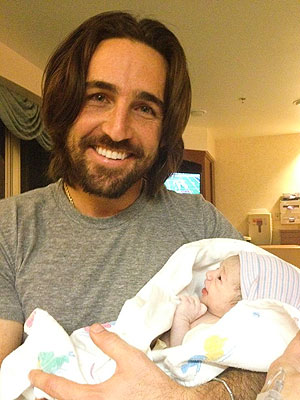
Jake Owen Welcomes Daughter Olive Pearl Courtesy Jake Owen


It’s a Thanksgiving baby!


Jake Owen and his wife Lacey welcomed their first child, daughter Olive Pearl Owen, on Thursday, Nov. 22 in Nashville, Tenn., his rep confirms to PEOPLE.


Pearl, as she will be called after Owen’s late godmother, weighed in at 6 lbs., 3 oz. and is 19½ inches long.


“Lacey and I are so excited to start our own family,” Owen, 31, tells PEOPLE. “We are looking forward to teaching Pearl everything we learned from our parents and also learning from her.”


Sharing a photo of his newborn daughter on Twitter, the musician wrote, “Today is the greatest day of my life. Turkey baby!!! Happy Thanksgiving.”

It’s been a whirlwind year for Owen and his wife, 22. After getting engaged on stage in April, the couple wed on the beach in May and announced the pregnancy in July.


– Sarah Michaud with reporting by Julie Dam


Read More..

AP PHOTOS: Simple surgery heals blind Indonesians

PADANG SIDEMPUAN, Indonesia (AP) — They came from the remotest parts of Indonesia, taking crowded overnight ferries and riding for hours in cars or buses — all in the hope that a simple, and free, surgical procedure would restore their eyesight.

Many patients were elderly and needed help to reach two hospitals in Sumatra where mass eye camps were held earlier this month by Nepalese surgeon Dr. Sanduk Ruit. During eight days, more than 1,400 cataracts were removed.

The patients camped out, sleeping side-by-side on military cots, eating donated food while fire trucks supplied water for showers and toilets. Many who had given up hope of seeing again left smiling after their bandages were removed.

"I've been blind for three years, and it's really bad," said Arlita Tobing, 65, whose sight was restored after the surgery. "I worked on someone's farm, but I couldn't work anymore."

Indonesia has one of the highest rates of blindness in the world, making it a target country for Ruit who travels throughout the developing world holding free mass eye camps while training doctors to perform the simple, stitch-free procedure he pioneered. He often visits hard-to-reach remote areas where health care is scarce and patients are poor. He believes that by teaching doctors how to perform his method of cataract removal, the rate of blindness can be reduced worldwide.

Cataracts are the leading cause of blindness globally, affecting about 20 million people who mostly live in poor countries, according to the World Health Organization.

"We get only one life, and that life is very short. I am blessed by God to have this opportunity," said Ruit, who runs the Tilganga Eye Center in Katmandu, Nepal. "The most important of that is training, taking the idea to other people."

During the recent camps, Ruit trained six doctors from Indonesia, Thailand and Singapore.

Here, in images, are scenes from the mobile eye camps:

Read More..

Bottled water on Thanksgiving menu in tainted region


EAST OROSI, Calif. — This was to be the first year Jessica Sanchez was in charge of Thanksgiving dinner.


She began preparations Wednesday, crossing through her family's small kitchen to a bottled water dispenser in the living room and filling a pan to wash the turkey.


She couldn't use the tap water because East Orosi is one of many Central Valley farm communities where the supply is tainted — by nitrates, arsenic or bacteria traced to decades of agricultural runoff.


Jessica's mother, Bertha Diaz, makes about $7.50 an hour picking grapefruit and lemons in the winter, grapes and blackberries in the summer. The cost of the tap water they use for bathing and gardening, plus the bottled water for drinking and cooking, is about 30% of her income.


On Wednesday, Diaz left for work at 4:30 am. Later in the morning, as she picked lemons, she called 19-year-old Jessica to tell her to be sure to finish washing the turkey with a vinegar rinse.


Jessica said her mother has a certain way of doing everything: folding laundry, holding a baby, washing a turkey.  Sometimes the two squabble.


"We're way too much alike. My grandmother says we are on exactly the same plane, so we hit heads,"  Jessica said as she applied the vinegar.


The Sanchez family didn't always live in East Orosi.


Before Jessica's baby brother Mannie died, home had been in Orosi proper. In the town of 8,000, the water warnings come and go, depending on the level of chemicals from contaminated groundwater making it into wells.


Jessica's family lived there in a little house. They could see their neighbor's swimming pool through a hole in the fence. One day, when Mannie was 1 1/2 , he sneaked next door. Six-year-old Jessica found him floating dead in the pool.


The family moved. Three years later, sister Marabel went blind at the age of 13, a complication of diabetes. Multiple studies have linked poor drinking water to the disease.


In the 1970s, Tulare County released a report  identifying 15 "non-viable" communities, East Orosi among them, where it would be a waste of money to concentrate water and sewer resources. The reasoning was that the communities were made up of farmworkers, and mechanical harvesters would be replacing them soon.


By the time Jessica was in sixth grade, her mother had started holding community water meetings at their house.


One night Jessica's father, a Mexican farmworker, got a call from the lawyer working on his immigration papers, asking for a meeting.


"The next thing we got [was] a call saying he had been deported," Jessica said.


Last year, when she called her father in Michoacan, Mexico, to tell him she was pregnant, she broke down and asked him to forgive her for failing him.


"You're not the first girl this has happened to," she remembers him saying. "You have your family. You're not alone. You are one of the lucky ones."


She named her son Jordan. She wanted a "J" name. She didn't think until later that she had named him after sacred waters.


This Thanksgiving Day, Jessica woke to find her mother at home. The packinghouses were closed, so there was no picking.


Diaz said she was sad about losing out on the paycheck, but happy for some "rest" as she bustled around the kitchen making pork tamales — always walking over to the dispenser for water.


Read More..

Egypt Leader and Obama Forge Link in Gaza Deal


Lefteris Pitarakis/Associated Press


Israelis in the town of Sderot watched a Palestinian missile on Wednesday, before a cease-fire.


WASHINGTON — President Obama skipped dessert at a long summit meeting dinner in Cambodia on Monday to rush back to his hotel suite. It was after 11:30 p.m., and his mind was on rockets in Gaza rather than Asian diplomacy. He picked up the telephone to call the Egyptian leader who is the new wild card in his Middle East calculations.


Over the course of the next 25 minutes, he and President Mohamed Morsi of Egypt hashed through ways to end the latest eruption of violence, a conversation that would lead Mr. Obama to send Secretary of State Hillary Rodham Clinton to the region. As he and Mr. Morsi talked, Mr. Obama felt they were making a connection. Three hours later, at 2:30 in the morning, they talked again.


The cease-fire brokered between Israel and Hamas on Wednesday was the official unveiling of this unlikely new geopolitical partnership, one with bracing potential if not a fair measure of risk for both men. After a rocky start to their relationship, Mr. Obama has decided to invest heavily in the leader whose election caused concern because of his ties to the Muslim Brotherhood, seeing in him an intermediary who might help make progress in the Middle East beyond the current crisis in Gaza.


The White House phone log tells part of the tale. Mr. Obama talked with Mr. Morsi three times within 24 hours and six times over the course of several days, an unusual amount of one-on-one time for a president. Mr. Obama told aides he was impressed with the Egyptian leader’s pragmatic confidence. He sensed an engineer’s precision with surprisingly little ideology. Most important, Mr. Obama told aides that he considered Mr. Morsi a straight shooter who delivered on what he promised and did not promise what he could not deliver.


“The thing that appealed to the president was how practical the conversations were — here’s the state of play, here are the issues we’re concerned about,” said a senior administration official who spoke on the condition of anonymity to discuss private conversations. “This was somebody focused on solving problems.”


The Egyptian side was also positive about the collaboration. Essam el-Haddad, the foreign policy adviser to the Egyptian president, described a singular partnership developing between Mr. Morsi, who is the most important international ally for Hamas, and Mr. Obama, who plays essentially the same role for Israel.


“Yes, they were carrying the point of view of the Israeli side but they were understanding also the other side, the Palestinian side,” Mr. Haddad said in Cairo as the cease-fire was being finalized on Wednesday. “We felt there was a high level of sincerity in trying to find a solution. The sincerity and understanding was very helpful.”


The fledgling partnership forged in the fires of the past week may be ephemeral, a unique moment of cooperation born out of necessity and driven by national interests that happened to coincide rather than any deeper meeting of the minds. Some longtime students of the Middle East cautioned against overestimating its meaning, recalling that Mr. Morsi’s Muslim Brotherhood constitutes a philosophical brother of Hamas even if it has renounced violence itself and become the governing party in Cairo.


“I would caution the president from believing that President Morsi has in any way distanced himself from his ideological roots,” said Robert Satloff, executive director of the Washington Institute for Near East Policy. “But if the president takes away the lesson that we can affect Egypt’s behavior through the artful use of leverage, that’s a good lesson. You can shape his behavior. You can’t change his ideology.”


Other veterans of Middle East policy agreed with the skepticism yet saw the seeds of what might eventually lead to broader agreement.


“It really is something with the potential to establish a new basis for diplomacy in the region,” said Tamara Cofman Wittes, who was Mr. Obama’s deputy assistant secretary of state for the Middle East until earlier this year and now runs the Saban Center for Middle East Policy at the Brookings Institution. “It’s just potential, but it’s particularly impressive potential.”


The relationship between the two leaders has come a long way in just 10 weeks. Mr. Morsi’s election in June as the first Islamist president of Egypt set nerves in Washington on edge and raised questions about the future of Egypt’s three-decade-old peace treaty with Israel. Matters worsened in September when Egyptian radicals protesting an anti-Islam video stormed the United States Embassy in Cairo.


Peter Baker reported from Washington, and David D. Kirkpatrick from Cairo.


This article has been revised to reflect the following correction:

Correction: November 21, 2012

An earlier version of this article misstated the given name of the director of the Saban Center for Middle East Policy at the Brookings Institution. She is Tamara Cofman Wittes, not Teresa.


Read More..

Mayim Bialik and Michael Stone Divorcing


11/21/2012 at 05:00 PM EST


After "much consideration and soul-searching," Mayim Bialik announced Wednesday that she and husband Michael Stone are divorcing after nine years of marriage.

The Big Bang Theory star, who has sons Miles, 7, and Fred, 4, with Stone, cites "irreconcilable differences" for the split, which she revealed in a statement on her Kveller.com parenting blog.

"Divorce is terribly sad, painful and incomprehensible for children. It is not something we have decided lightly," she writes.

The former star of TV's Blossom, 36, also says that the split is not due to the attachment parenting she discusses in her book Beyond the Sling. "Relationships are complicated no matter what style of parenting you choose," she says.

"The main priority for us now is to make the transition to two loving homes as smooth and painless as possible," Bialik, 36, continues. "Our sons deserve parents committed to their growth and health and that’s what we are focusing on. Our privacy has always been important and is even more so now, and we thank you in advance for respecting it as we negotiate this new terrain."

She concludes by saying, "We will be ok."

The couple were married in August 2003 in Pasadena, Calif.

Read More..